
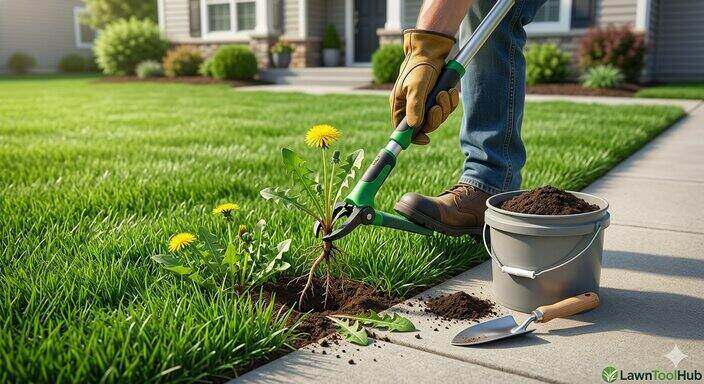
Staring down a lawn infested with stubborn, deep-rooted dandelions or crabgrass can test the patience of any dedicated homeowner. Spraying harsh chemical herbicides isn’t always the answer, especially if you have pets, kids, or a desire to keep your soil ecosystem thriving. That is why claw-style weeding tools are a game-changer. However, if you wield them aggressively, you can easily rip out massive chunks of turf, leaving your lawn looking like a localized war zone. Mastering how to use a stand-up long handle weeder without damaging grass ensures you pull the entire weed by the root while leaving your surrounding lawn perfectly intact.
When I’m out in the yard tackling weekend maintenance, saving my lower back is just as vital as protecting my turf. A mechanical advantage changes everything. If you are struggling with a tool that bends under pressure or tears wider holes than necessary, you are likely using the wrong gear. Upgrading to the Best long handle weeder cultivator garden tool—one designed with a precision foot pedal, targeted steel claws, and an ergonomic shaft—will give you maximum leverage with minimal turf disruption. But even with a top-tier tool, technique is everything. Let’s look at a classic breakdown of what can go wrong and exactly how to fix it.
Case Study: The “Crater Maker” vs. Precision Weeding
Last summer, my neighbor across the street bought a shiny new stand-up weeder. He went to town on a patch of dandelions in his front yard. By Sunday evening, the weeds were gone, but his lawn looked like it had been hit by a miniature mortar attack. He left behind dozens of jagged, two-inch craters of exposed soil. Within two weeks, those bare dirt patches became the perfect landing strip for airborne weed seeds, creating a worse infestation than before.
What went wrong? He fell into the three most common trap mistakes that destroy surrounding turf:
- The Wet-Blanket Twist: He pulled weeds immediately after a torrential downpour when the soil was complete mud. The liquefied mud offers zero resistance, causing the tool to blow out the entire root wall and the healthy grass knitted next to it.
- The Aggressive Heel Stomp: Instead of using smooth, vertical body weight, he slammed his boot onto the pedal, slicing through peripheral grass roots before even engaging the weed.
- The Blind Yank: He pulled the tool up at an angle rather than using the integrated fulcrum lever to pop the root straight up and out vertically.
The Step-by-Step Guide to Clean Root Extraction
To avoid turning your lawn into a series of craters, you need to treat weed extraction like a surgical procedure. Here is exactly how to execute a clean pull every single time.
Step 1: Assess and Dial In Soil Moisture
Never weed bone-dry soil, and never weed muddy soil. Dry clay or tightly packed dirt will grip the weed root so tightly that the claws will snap the weed off at the crown, leaving the root alive to resprout. Muddy soil will wash out entirely. Aim for a “goldilocks” window—roughly 12 to 24 hours after a light rain or a scheduled watering cycle. The soil should be soft enough to penetrate easily but dry enough to hold its shape.
Step 2: Center the Claws Over the Crown
Part the healthy blades of grass with your fingers or the tip of the tool to locate the absolute center of the weed’s crown (where the leaves meet the root). Position the open steel claws directly over this point. Keeping the shaft of the tool completely vertical, place your foot on the stepping pedal. Use steady, downward pressure from your body weight to sink the claws deep into the ground.
Step 3: Engage the Pivot Mechanism
Most premium long-handle weeders utilize a stepping platform that doubles as a fulcrum. Lean the handle back toward the stepping pedal. This movement forces the underwater claws to close like a fist around the taproot while leveraging the tool’s base against the ground. Do not twist the handle unless your specific manufacturer manual explicitly calls for a screw-like motion; twisting in standard models shears the roots of adjacent grass.
Step 4: The Vertical Pop
Pull the tool straight up out of the ground. Because the claws closed around the core taproot, the weed should come out cleanly, resembling a plug.
Advanced Tactics to Keep Your Grass Pristine
Once the weed is out, your job isn’t quite done. If you leave an open hole, the surrounding grass roots will dry out, causing a localized brown spot.
Close the Void Immediately
The absolute secret to learning how to use a stand-up long handle weeder without damaging grass lies in what you do after the pull. As soon as the weed is ejected from the claws, take the heel of your work boot and step firmly on the edges of the open hole, pressing inward toward the center. This collapses the underground cavity, pushes the displaced soil back into place, and ensures the roots of the neighboring healthy grass make immediate contact with the earth.
Repairing Deep Taproot Divots
If you extracted a massive bull thistle or an ancient dandelion that left a substantial void, don’t rely on the soil to heal itself. Keep a small five-gallon bucket of lawn topdress mixture (50% screened topsoil and 50% sharp masonry sand) nearby. Drop a single handful of this mix directly into the divot, press it down, and brush the surrounding healthy grass blades over it.
Tool Maintenance for Cleaner Cuts
Dull, rusty claws don’t slice into the ground smoothly; they hack through it, creating massive collateral damage to your lawn’s root system. At the end of every afternoon session, blast the claws clean with a hose, brush away packed dirt with a wire brush, and spray the moving pivot joints with a light coat of silicone lubricant. Sharp, clean claws slide right past healthy grass blades, targeting only the thick weed root below.
By slowing down your pacing, mastering the lever mechanics, and closing the soil voids instantly, you can enjoy a completely weed-free yard without leaving a single trace behind.
