
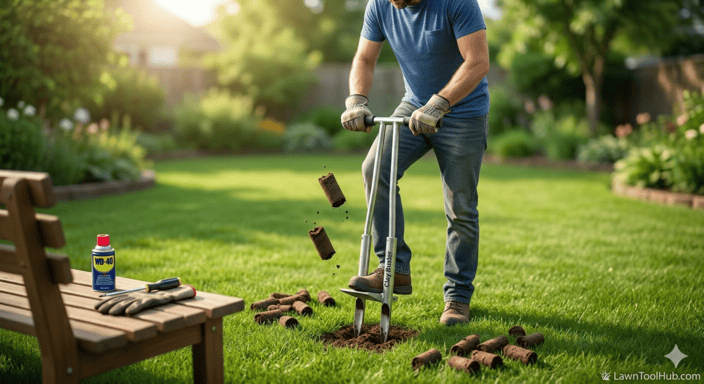
If your property sits on a heavy, dense base of clay, you already know the unique headaches it causes. It bakes rock-hard in the summer sun, pools water like a swimming pool during heavy rain, and suffocates your turf’s root system. When I’m out in the yard, I can instantly tell a compacted lawn by how stiff the turf feels underfoot. The ultimate fix for this concrete-like dirt is core aeration, but timing it perfectly is everything. If you jump the gun or wait too long, you risk damaging your turf or breaking your tools. Knowing when is the best time to aerate a clay lawn manually can mean the difference between a thriving, deep-rooted lawn and an absolute mud slick.
Wrestling with manual yard tools takes a decent amount of physical effort, which is why smart tool choices matter across your entire routine. Just like opting for a maneuverable, lightweight lawn edger for women or anyone wanting to save their lower back makes cutting crisp edges a breeze, choosing the right seasonal window for heavy soil work saves you from a world of physical exhaustion. Let’s dive straight into the analytical breakdown of clay soil behavior so you know exactly when to pull those perfect core plugs.
The Seasonal Matrix: Matching Grass Type to Clay Behavior
Clay particles are microscopic and tightly packed. Unlike sandy soil, clay holds moisture tightly and undergoes dramatic structural changes based on temperature and active turf growth. To find the ideal window for your yard, you must match your specific grass type to its peak growing season.
| Turf Category | Common Grass Species | Best Aeration Window | Soil Condition Goal |
| Cool-Season Grasses | Kentucky Bluegrass, Perennial Ryegrass, Fine/Tall Fescue | Early Autumn (Late August to October) | Moist, pliable, active root recovery |
| Warm-Season Grasses | Bermuda, Zoysia, St. Augustine, Centipede | Late Spring to Early Summer (May to June) | Warm soil ($70^\circ\text{F}+$ Code), peak aggressive growth |
Read More: Should You Water Clay Soil Before Using a Hand Aerator?
Why Active Growth Rules the Schedule
Never manually aerate a dormant lawn. Slicing open a clay grid forces the turf to expend energy to heal its root zones. If you pull plugs while cool-season grass is shivering in winter or while Bermuda is sleeping, weeds will quickly claim the open holes before your grass can recover.
How-To: Step-by-Step Manual Clay Aeration for Maximum Success
Once you have identified the right calendar month based on your turf type, you need to execute the job precisely. Manual aeration is an intense workout, but following this specific sequence ensures you get maximum depth with minimal resistance.
Step 1: Check the 48-Hour Moisture Window
Never attempt to punch holes in bone-dry clay; you won’t get more than a half-inch of penetration before the tool stops cold. Conversely, soaking wet clay turns into a sticky, clogged mess that tears up turf sections. In my experience, the sweet spot is 24 to 48 hours after a moderate rain shower. If nature doesn’t cooperate, run your sprinklers to apply roughly a half-inch of water two days before you plan to aerate.
Step 2: Clear the Thatch and Debris
Mow your lawn slightly shorter than your usual cutting height—around 1.5 to 2 inches is ideal. Clean up any lingering sticks, pine cones, or thick leaf piles. This gives you clear, unobstructed access to the soil surface and prevents your manual tool from getting blocked by surface organic matter.
Step 3: Plunge and Twist Vertically
Using a high-quality manual core aerator featuring hollow tines, step down fully onto the foot bar with your body weight. Keep the tool completely vertical. Rocking it heavily side-to-side will widen the top of the hole, ripping the grass crown and disrupting the soil structure unnecessarily. Pull the tool straight up to extract a clean, cylindrical plug.
Step 4: Spacing and Pattern Management
Aim for a grid pattern where holes are spaced roughly 4 to 6 inches apart. For heavily compacted high-traffic areas along walkways or pet runs, make a second pass perpendicular to your first grid to maximize oxygen penetration into the dense clay.
Step 5: Overseed and Fertilize Immediately
The moment you finish pulling plugs is your golden opportunity. The open holes bypass the dense clay barrier, offering a direct path to the subsoil. Drop your high-quality grass seed, starter fertilizer, or an organic topdressing like fine compost right over the lawn. The amendments will fill the voids, permanently altering the soil structure for the better.
Keeping Your Tools Moving: Pro-Tip Maintenance
💡 Pro-Tip: The WD-40 Plunge Trick
Clay soil contains high amounts of aluminum silicate, making it incredibly sticky when damp. As you work, clay plugs will inevitably get jammed inside your aerator’s hollow metal tines. To prevent this constant clogging, spray the inside and outside of the metal tines thoroughly with a heavy coat of WD-40 or a silicone-based lubricant before you take your first step. Keep a long, thick screwdriver in your back pocket to quickly poke out any stubborn clay plugs that lose their slickness halfway through the project.
Frequently Asked Questions
What should I do with the clay plugs left on my grass?
Leave them right where they are! It might look like a flock of geese visited your yard for a few days, but those plugs will break down naturally under rain and sunlight within one to two weeks. As they dissolve, they return valuable minerals to the surface and help decompose surface thatch.
How deep should my manual core aerator plugs actually be?
When is the best time to aerate a clay lawn manually? It’s when you can consistently pull plugs that are at least 2 to 3 inches deep. Anything shallower than 2 inches fails to penetrate past the top compaction layer, meaning your grass roots won’t get the deep oxygen and water channels they need to survive summer droughts.
Can I use a liquid aerator instead of a manual tool on hard clay?
Liquid aerators use specialized surfactants to break the surface tension of water, helping it penetrate tight soils temporarily. While they offer a quick, low-effort boost, they cannot physically remove soil mass. For true, long-term relief from severe clay compaction, nothing replaces the mechanical extraction of physical core plugs.
