
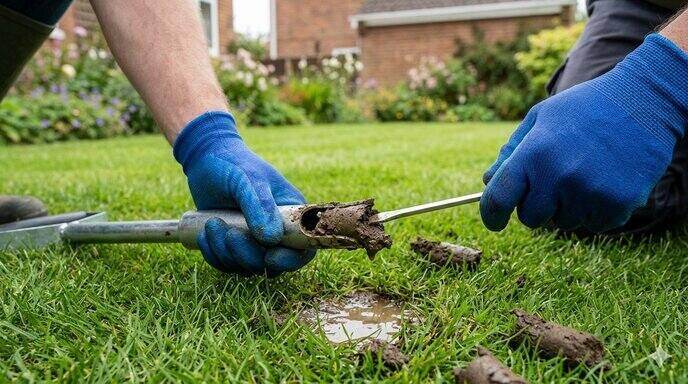
If you have ever tried to punch clean holes into a thick, compacted clay lawn, you already know the ultimate test of patience. You push the tool down, step on the foot bar, pull it up, and… nothing happens. Instead of pulling out a neat, cylindrical plug of dirt, the hollow tines are completely packed solid with what feels like wet concrete. Learning how to unclog a manual core aerator stuck with clay soil is essentially a rite of passage for any homeowner dealing with heavy, stubborn ground.
When I’m out in the yard tackling compaction, dealing with blocked tines is easily the most frustrating part of the job. Clay behaves differently than any other soil type; its microscopic particles stick together and create a powerful vacuum inside narrow metal tubes. If your current tool forces you to stop every single step to dig out a plug, it might simply lack the proper engineering required for heavy ground. Upgrading to the Best manual core aerator for clay soil—ideally one featuring tapered, open-back, or highly polished modern tines—will dramatically minimize this friction. But if you’re currently stuck mid-project with a jammed tool, let’s get those plugged tines cleared out so you can get back to work.
Why Clay Soil Blocks Aerator Tines So Badly
To fix the problem, you have to understand the mechanics of what is happening inside the tool. Clay is highly plastic and retains water like a sponge. When a hollow tine is forced into dry clay, the soil resists expanding and wedges itself tightly inside the tube. If the clay is too wet, it acts like a sticky glue, bonding to the raw inner steel walls of the aerator.
Here are the primary culprits behind a chronically jammed aerator:
- Improper Soil Moisture: Aerating ground that is bone-dry or completely saturated creates the perfect storm for severe clogging.
- Rust and Pitting Inside the Tines: Brand-new aerators usually have painted or highly polished inner walls. Once that coating wears off, raw steel rusts, creating a rough surface that clay grips onto like velcro.
- Straight-Tube Designs: Cheaper manual aerators use perfectly straight cylinders. Professional tools use slightly tapered tines that are wider at the top than the bottom, allowing the soil plug to expand and slide upward effortlessly.
Read More: When is the Best Time to Aerate a Clay Lawn Manually?
The Safe and Fast Way to Unclog a Manual Core Aerator Stuck with Clay Soil
When a clog happens, do not start violently slamming the tool against your concrete driveway or a brick wall. This will warp the hollow tips, turning a round opening into an oval, which ensures the tool will permanently clog on every single pump thereafter. Follow this controlled, step-by-step troubleshooting sequence instead.
1. The Screwdriver and Mallet Method
Set the aerator down on a flat patch of grass or a wooden workbench. Insert a long, sturdy flathead screwdriver or an extra-long alignment punch directly into the top or bottom of the plugged tine. Tap the handle of the screwdriver gently with a rubber mallet or a block of wood to drive the stubborn clay plug straight out through the bottom opening.
2. The High-Pressure Water Blast
If the clay has dried out slightly inside the tubes and become rock-hard, manual scraping will exhaust you. Hook up a high-pressure nozzle to your garden hose (or use a pressure washer on a low settings). Aim the stream directly into the top exit hole of the tines. The focused water pressure will soften the clay core and force it to slide out smoothly.
3. The Heat Gun Trick for Stubborn Plugs
If you have a true emergency clog where the clay has dried completely solid inside the metal, grab a basic heat gun or a hair dryer. Apply heat to the outside of the metal tines for 60 to 90 seconds. Metal expands slightly when heated, while the clay plug inside will shrink as its remaining moisture evaporates. Once heated, a quick poke with a screwdriver will pop the plug out instantly.
💡 Pro-Tip: The Lubrication Secret
Once you have successfully cleared the blockage, wipe the inside and outside of the tines completely dry with an old rag. Spray a generous coat of heavy-duty silicone spray, Teflon lubricant, or a standard non-stick cooking spray inside the hollow tubes. Let it dry for a minute before hitting the lawn again. This creates an incredibly slick barrier that prevents wet clay from bonding to the raw metal walls, allowing plugs to slide right through.
How to Prepare Your Lawn to Prevent Future Clogs
Clearing a clog is great, but changing your lawn preparation strategy will ensure you never have to deal with it again. The secret to flawless manual aeration lies entirely in managing soil moisture.
Never attempt to use a manual tool on dry, unwatered clay. It will ruin your back and jam your tool. Conversely, walking out onto a muddy lawn after a torrential downpour will turn the inside of your aerator into a sticky mess.
In my experience, the ideal window is exactly 24 to 48 hours after a deep rain or a heavy watering cycle. You want the soil to feel like a well-wrung sponge: soft enough to yield to your body weight on the footbar, but dry enough that the dirt crumbles slightly when you squeeze a plug between your fingers.
Before you start your next pass, consider scattering a thin layer of sharp masonry sand or fine compost over particularly bad spots. As the aerator plunges through this top layer, it pulls the sand down into the tines, effectively self-cleaning and scouring the inner walls of the metal with every step. Keep your tools clean, lubricate the steel, and you’ll easily punch clean, deep cores that let your grass breathe.
