
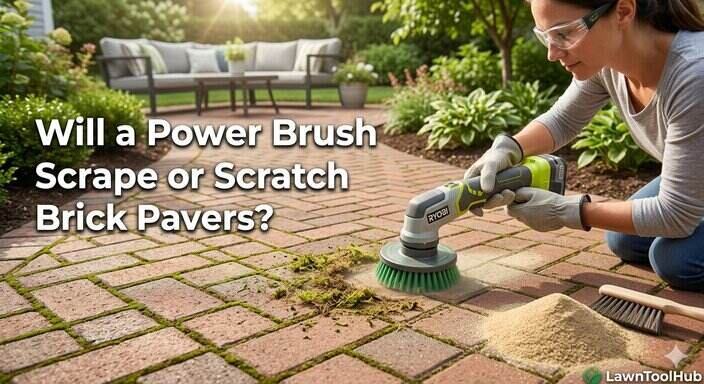
Few features elevate a property’s curb appeal quite like a beautifully laid brick patio, walkway, or driveway. But over time, the outdoor elements take their toll. Dirt settles into the texture, weeds find a home in the polymeric sand, and slimy green moss creeps across the surface, turning your beautiful hardscape into a slippery hazard. When it comes time for deep cleaning, a motorized surface cleaner seems like the ultimate time-saver. However, before firing up a heavy-duty machine, every protective homeowner hits the brakes with one crucial question: will a power brush scrape or scratch brick pavers during the cleaning process?
When I’m out in the yard working on hardscape maintenance, I treat paving stones with the same level of care as a high-end lawn. Brick is tough, but its surface finish isn’t entirely indestructible. If you pick an overly aggressive tool, you can permanently strip away the clay’s smooth factory glaze or alter its rich color profile. Choosing the Best handheld power brush for removing moss from pavers means finding a sweet spot between agitating stubborn organic growth out of tight joints and respecting the structural integrity of the stone. To keep your hardscape looking flawless, you need to understand exactly how different bristling materials interact with clay and concrete under motorized friction. Let’s separate the myths from the hard facts of hardscape care.
Myth vs. Fact: The Realities of Motorized Paver Brushing
There is a ton of conflicting advice out there regarding hardscape cleaning. Some homeowners claim motorized sweepers ruined their patios, while others swear by them for effortless maintenance. Let’s look at the actual physics behind surface friction and debunk the most common misconceptions.
Myth 1: All power brushes are too aggressive for outdoor brick.
- Fact: The tool’s motor isn’t what damages your stone; the material of the bristles determines the risk. Motorized sweepers fitted with soft or medium-stiff nylon, polypropylene, or natural fiber rollers glide right over brick without leaving a trace. These materials are pliable enough to contour to the texture of the paver while cleanly scrubbing away moss, mud, and surface algae.
Myth 2: Steel wire bristle attachments are perfectly fine for deep weed removal.
- Fact: Steel wire wheels are highly destructive to clay and concrete finishes. When spun at high RPMs, steel wire will aggressively bite into the brick surface. This will scrape or scratch brick pavers, leaving bright grey score marks, stripping away the decorative sealant, and creating a porous, micro-damaged surface where weed seeds can catch even easier next season.
Myth 3: Power brushing will instantly empty out all your joint sand.
- Fact: While a high-RPM sweeper will pull up loose, degraded sand along with moss roots, it will not destroy stable, properly activated polymeric sand joints if you use the correct angle. In fact, removing the loose top layer of sand is often necessary to properly clear out the root systems of weeds and moss so you can topdress the joints with fresh sand later.
Frequently Asked Questions (FAQ)
Can I use a power brush on concrete pavers vs. clay bricks?
Concrete pavers are generally slightly more susceptible to surface micro-scratching than traditional kiln-fired clay bricks, which are incredibly dense. If you are cleaning molded concrete paving stones, always stick to soft polypropylene bristles and avoid lingering in one exact spot for more than a few seconds.
How do I know if my brush bristles are too stiff?
Perform the “scratch test” on a hidden leftover paver or a completely obscured corner of your walkway near the foundation. Run the motorized brush over the test area at full operating speed for five seconds. Wipe the surface clean with a damp rag and inspect it under direct light. If you see a dull spot, a chalky white residue, or fine directional lines, the bristles are too abrasive.
Should I sweep my pavers wet or dry?
For general dust, dry soil, and loose autumn leaves, operating the brush on a completely dry surface prevents mud from smearing into the brick’s pores. However, if you are actively tackling thick, stubborn moss or slick green algae, lightly misting the surface with water helps lubricate the bristles and loosens the organic root grip without generating thick clouds of dust.
4 Pro-Rules to Safely Power Brush Your Walkway
If you want to maximize your cleaning speed without risking a single scratch, follow these field-tested operational rules:
- Keep the Machine Moving Constantly: Never let a motorized brush dwell in a single stationary spot. The constant friction in one concentrated area generates heat and localized abrasion, which can wear down the paver’s face. Keep the brush moving in slow, sweeping, continuous strokes.
- Work at a 45-Degree Angle to the Joint Lines: Driving a power brush parallel to your paver joints acts like a vacuum, digging deep into the gaps and tearing out your structural sand. Instead, operate the brush at a 45-degree diagonal angle across the grid pattern. This allows the bristles to skim the tops of the bricks and cleanly shear off moss without dipping too deep into the foundational joint channels.
- Let the RPMs Do the Work—Do Not Push Down: One of the biggest mistakes users make with a lightweight power tool is leaning their body weight into the handle to scrub harder. Forcing the brush downward compresses the bristles, forcing the rigid plastic or metal backing of the brush head closer to the ground. Hold the machine lightly, allowing the tips of the spinning bristles to flick away the debris naturally.
- Re-Seal the Surface Post-Cleaning: A thorough motorized brushing clears away old, flaking sealer along with the dirt. Once your pavers are completely clean and dry, sweep fresh polymeric sand into the joints, mist it to lock it in place, and apply a high-quality breathable paver sealant. This adds a protective invisible barrier that prevents future moss attachment and keeps your brick colors looking incredibly vibrant.
By matching a soft, high-quality nylon or polypropylene brush head with a diagonal sweeping technique, you can reclaim your pristine, moss-free hardscape safely, efficiently, and completely free of unsightly scratches.
