
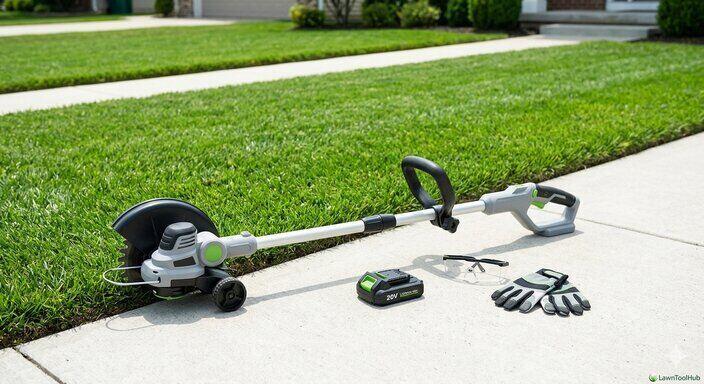
There is nothing quite like looking across a freshly mowed yard and seeing crisp, razor-sharp lines separating your lush green turf from the concrete driveway or sidewalk. It is the ultimate finishing touch that takes a lawn from “decent” to “neighborhood envy.” But let’s be honest: wrestling with a heavy, vibrating gas-powered machine or dragging a 100-foot extension cord around the property ruins the fun. If heavy equipment leaves your arms shaking and your lower back aching, you are probably wondering: what is the lightest battery-powered lawn edger on the market today?
When I’m out in the yard on a hot Saturday afternoon, I want tools that work with me, not against me. Maneuverability is everything, especially for homeowners who don’t want to compromise on a pristine edge just because a tool is too bulky to handle comfortably. In fact, when folks ask me for a recommendation that balances a featherweight build with enough motor power to slice through stubborn turf roots, I often point them toward specialized cordless models. Finding the Best lawn edger for a woman or anyone prioritizing ergonomic comfort means looking at tools that slash the weight in half without leaving a ragged, half-cut edge behind. Let’s break down the lightweight market contenders and see exactly what makes a tool the true reigning featherweight champion.
The Lightweight Contenders: Deep-Dive Weight Breakdown
To find out exactly what is the lightest battery-powered lawn edger on the market, we have to look past the marketing fluff and separate bare tool weights from their operational, battery-installed weights. A tool might look light on the store shelf, but once you slide a heavy 4.0Ah battery pack onto the handle, the center of gravity shifts completely.
The table below outlines the top ultra-lightweight cordless edgers currently leading the industry, organized by bare tool weight, recommended battery pairing, and total operational heft.
| Brand & Model | Bare Tool Weight | Battery Pairing (Recommended) | Total Operational Weight | Distinct Advantage |
| Worx WG163 GT 3.0 (Trimmer/Edger Combo) | 5.3 lbs | 20V 2.0Ah (1.1 lbs) | 6.4 lbs | Absolute lightest weight, wheels guide the edge smoothly. |
| Makita XRU12SM1 (Curved Shaft Combo) | 6.4 lbs | 18V 4.0Ah (1.3 lbs) | 7.7 lbs | Commercial brush reliability with an ultra-slim profile. |
| Greenworks 24V 8-Inch Edger (Dedicated) | 7.2 lbs | 24V 2.0Ah (1.2 lbs) | 8.4 lbs | True dedicated dual-wheel edger stability at a fraction of the usual weight. |
| Ryobi ONE+ 18V 9-Inch Edger (Dedicated) | 7.9 lbs | 18V 2.0Ah (1.0 lbs) | 8.9 lbs | Excellent curb wheel adjustability for varying sidewalk heights. |
Read More: Are Easy-Start Lawn Edgers Worth It for Small Yards?
How to Maximize a Lightweight Edger Without Overworking the Motor
Choosing a featherweight tool means making a conscious trade-off. You are swapping a heavy, high-torque gas engine for a nimble, battery-driven electric motor. If you try to force a 6-pound machine through an overgrown, muddy trench that hasn’t been cut in three years, the motor will overheat and thermal overload sensors will shut it down.
Follow this definitive, step-by-step strategy to get professional, clean lines using a compact cordless edger.
Step 1: Establish the First Edge Manually (If Overgrown)
If your grass has completely encroached over your concrete sidewalks, do not use your lightweight battery edger to blast through the initial wall of dirt. The small motor will strain, rapidly draining your battery. Instead, take a manual half-moon step edger or a spade shovel and cut the very first clean line of the season by hand. Pull away the thick chunks of turf and soil to expose the concrete edge clearly.
Step 2: Set the Blade Depth Consistently Shallow
Adjust your edger’s depth wheel so the blade only penetrates the soil by roughly 1/2 inch to 1 inch maximum. You do not need to dig a mini-trench; you only need to cut the horizontal stolons and roots of the grass traveling toward the concrete. Keeping the blade shallow drastically reduces drag on the motor and saves your battery life.
Step 3: Let the Tool Build RPMs Before Entering the Cut
Step onto a clear section of the pavement, pull the trigger, and let the electric motor spin up to its absolute maximum speed before you let the blade drop into the grass channel. Striking the dirt from a dead stop wedges debris between the blade and the guard, causing instant stalling.
Step 4: Walk at a Steady, Continuous Pace
Do not saw the machine back and forth. Guide the wheel smoothly along the edge of the pavement, letting the high RPMs do the cutting work. If you hear the motor pitch drop or strain, slow down your forward walking speed slightly to let the blade clear out the accumulated debris.
💡 Pro-Tip: The Battery Balancing Act
To keep your total operational weight as low as humanly possible, opt for smaller capacity batteries (like a 2.0Ah or 2.5Ah pack) instead of heavy 4.0Ah or 5.0Ah extended-run packs. While a smaller battery offers less total runtime, it shaves over a pound off the tool’s backend. This drastically improves the balance point of the shaft, reduces forearm fatigue, and makes a 20-minute edging job feel completely effortless.
Critical Safety and Maintenance Tactics for Cordless Edgers
Just because these machines are incredibly light doesn’t mean they don’t demand respect. A spinning steel edger blade rotates at thousands of RPMs and can throw hidden rocks, gravel, or pieces of metal right back at your shins.
- Always Wear Safety Glasses and Closed-Toe Shoes: Never edge in sandals or mesh running shoes. The blade guard deflects most debris, but rogue stones can ricochet off the concrete at blinding speeds.
- Clear the Run Prior to Cutting: Take two minutes to walk your fence lines, driveways, and curbs before turning on the tool. Kick away loose rocks, thick twigs, or toys that could jam the blade guard or dull your blade instantly.
- Keep the Underside of the Guard Clean: Wet grass clippings and damp soil will cake inside the protective blade guard. After removing the battery pack, flip the tool over and scrape away built-up mud with an old putty knife. A choked guard increases friction, making the motor work harder and shortening the tool’s lifespan.
- Inspect and Change the Blade Regularly: A dull edger blade doesn’t cut grass—it rips it, leaving ugly, frayed brown tips along your edge. When the blade rounds off significantly at the corners or shrinks in length, replace it immediately to keep your cuts clean and effortless.
By matching the right featherweight tool to your specific yard size, keeping your cuts shallow, and maintaining high rotational speeds, you can achieve pristine, professional curb appeal without breaking a sweat or tiring your arms out.
