
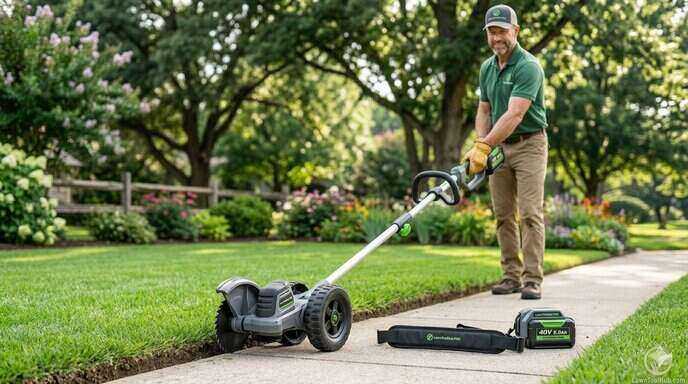
There is a huge difference between finishing a weekend yard session feeling accomplished versus finishing it flat on your back with a heating pad. When I’m out in the yard prepping my property for summer, establishing clean, deep borders along the driveway is easily my favorite task. It makes the whole property pop. But man, the repetitive twisting, constant stooping, and heavy engine vibrations can take a massive toll on your spine. If you have ever woken up stiff the morning after grooming your sidewalks, it is time to learn how to choose an ergonomic lawn edger that won’t hurt your back.
The good news is that outdoor power equipment design has come a long way from the heavy, unyielding steel beasts of the past. If you are shopping for lightweight maneuverability, finding an easy to use lawn edger for female gardeners or homeowners who prefer smart mechanical leverage over brute upper-body strength is easier than ever. By focusing on critical geometry features like adjustable shafts, loop handle placement, and proper weight distribution, you can easily maintain a pristine edge without stressing your lumbar spine.
The Anatomy of an Ergonomic Edger: Feature Breakdown
To safeguard your back, you need to understand the structural design elements that minimize muscle fatigue. A tool can have all the raw motor power in the world, but if it forces you into a permanent hunch, it belongs back on the retail shelf.
| Ergonomic Design Feature | Impact on Your Body | What to Look For |
| Shaft Design | Determines your posture and reaching distance. | Straight, telescoping shafts are ideal for taller users. Curved shafts work beautifully for shorter operators. |
| Handle Configuration | Controls your wrist alignment and steering effort. | Fully adjustable D-loop auxiliary handles that slide along the shaft to match your exact arm length. |
| Guide Wheel System | Carries the weight of the motor so your arms don’t have to. | Dual-wheel systems or heavy-duty rear drop-wheels provide concrete-supported stability. |
| Vibration Isolation | Reduces nerve fatigue and muscle cramping. | Rubberized overmold grips and isolated motor mounts that absorb high-frequency engine hum. |
Read More: Gas vs. Battery Edgers: Which is Easier to Maintain for Beginners?
Step-by-Step Guide: How to Choose an Ergonomic Lawn Edger That Won’t Hurt Your Back
Choosing the right tool requires a quick self-assessment of your physical height, strength, and the layout of your property. Follow this practical checklist when evaluating your next purchase.
1. Match the Shaft Length to Your Upright Standing Height
The single biggest mistake homeowners make is buying a fixed-length edger that forces them to bend forward at the waist to keep the blade in the dirt.
- The Test: Stand up completely straight with your shoulders back. Hold your arms down naturally at your sides with a slight, comfortable bend at the elbows.
- The Goal: The primary trigger handle of the tool should rest naturally in your hand at this exact height. Look for telescoping or adjustable aluminum shafts that lock firmly into place so you never have to slouch to operate the machine.
2. Prioritize Multi-Position auxiliary Handles
Your dominant hand operates the throttle trigger at the rear, but your non-dominant hand does all the actual steering and lifting via the forward handle. Avoid tools with molded, permanent plastic front grips. Instead, look for a clamping loop handle that can be loosened, slid up or down the shaft, and rotated horizontally. This customization distributes the weight of the tool evenly between both shoulders instead of overloading your lower back muscles.
3. Let a Curb Wheel Carry the Load
If you are using a standard string trimmer with an articulating head to edge your grass, you are forcing your core muscles to constantly suspend several pounds of tool weight in mid-air. An ergonomic edger should feature a dedicated guide wheel that rolls smoothly directly on top of your concrete sidewalk. The wheel acts as a mechanical fulcrum, carrying 90% of the tool’s weight while you simply guide it forward with light pressure.
4. Opt for Low-Mass Power Sources
Gas engines are powerful, but the weight of a fuel tank, oil reservoir, and heavy pull-start assembly adds significant strain to your lower back during extended use. Modern brushless cordless edgers offer identical cutting speeds at a fraction of the physical mass. Swapping to a lithium-ion power source drastically reduces tool weight, making it incredibly easy to lift, transport, and hang up on your garage storage racks without straining a muscle.
💡 Pro-Tip: The Support Harness Secret
If you have an exceptionally large corner lot with hundreds of feet of concrete curbing, do not rely on your arms alone. Buy a universal padded shoulder strap or a dual-shoulder backpack harness that clips directly onto your edger’s shaft. A harness transfers the physical weight of the motor away from your wrists and lower back, distributing the load across your core and hips.
Real-World Operational Tips for Back Pain Prevention
Once you have selected your ergonomic tool, how you move your body during your weekend yard routine is just as vital as the machine’s design.
- Walk Forward, Never Backward: Always walk forward along the sidewalk as you cut your edge. Backstepping forces you to twist your torso awkwardly to see your work path, which places immediate, dangerous rotational stress on your lumbar spinal discs.
- Keep the Tool Close to Your Core: Avoid the temptation to extend your arms fully outward away from your chest. The farther away the tool is from your body, the heavier it feels due to leverage physics. Keep your elbows tucked close to your ribs to let your core muscles support the tool.
- Check the Depth Adjuster Regularly: Don’t dig trenches deeper than necessary. Setting your blade depth to slice through two inches of solid clay forces the motor to fight immense resistance, causing the tool to jerkingly pull forward and strain your shoulders. Keep the depth setting to a modest half-inch past the bottom of the thatch layer for smooth, low-vibration operation.